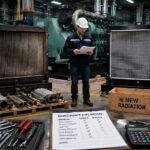

A generator rarely fails without warning. The early signs are often subtle a temperature gauge running slightly higher than normal, a faint metallic smell after shutdown, or a radiator fan working harder than it used to.
That gradual shift is often when radiator rebuilding becomes a serious consideration, even if operators don’t realize it yet.
Most facilities assume replacement is the only reliable fix. But in heavy duty environments, especially where downtime has a real financial cost, rebuilding often becomes the more practical, less disruptive path. Not always, but often enough to deserve a closer look.
In many cases, generator radiator rebuilding Canada is less about fixing a broken part and more about restoring the cooling system’s ability to perform under pressure without starting from scratch.
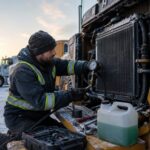
At its core, generator radiator rebuilding refers to the process of restoring a radiator’s internal structure so it can perform like new again. This typically involves cleaning, re-coring damaged sections, repairing leaks, and straightening fins and tubes.
Unlike simple patchwork repairs, the generator radiator rebuilding process focuses on rebuilding the heat exchange capability itself, not just sealing visible damage.
In industrial settings, this becomes especially relevant because generators don’t operate in controlled environments. Dust, vibration, and continuous load all accelerate wear.
So instead of waiting for total failure, technicians often intervene earlier with structured restoration. That’s where generator radiator rebuilding becomes a long-term reliability strategy rather than a short term fix.
Industrial radiators don’t fail randomly. There’s usually a pattern underneath it.
The most frequent generator radiator problems include clogged cores, corrosion inside tubes, coolant contamination, and fin blockages caused by debris or oil residue.
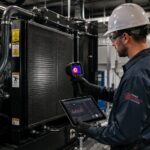
You may also notice uneven cooling across the radiator surface. That’s often a sign that airflow is restricted or internal passages are partially blocked.
Sometimes the issue is subtle the generator still runs, but it operates at a higher temperature than normal. That extra heat doesn’t seem alarming at first… until it becomes consistent.
In many of these cases, generator radiator rebuilding becomes the more sustainable option compared to constant patch repairs.
There’s a point where a radiator stops being “inefficient” and starts becoming a risk.
These generator radiator warning signs tend to show up before failure:
When two or more of these appear together, it is usually no longer random wear. It’s the overall system degradation.
At that stage, generator radiator rebuilding is often more cost-effective than repeated servicing that only delays the inevitable.
And yes, many operators keep running the system anyway. Until the shutdown forces the decision for them.
This is where most decisions get stuck.
A full replacement feels safer. New parts, fresh warranty, no uncertainty. But it also comes with higher cost, longer lead times, and potential compatibility adjustments.
Rebuilding, on the other hand, works with what already exists. The structure stays, but the internal performance is restored.
| Factor | Rebuilding | Replacement | Practical Meaning |
| Cost | Lower | Higher | Budget impact varies significantly |
| Downtime | Shorter | Longer | Replacement often needs more logistics |
| Performance | Restored | New | Both can perform well when done right |
| Environmental Impact | Lower waste | Higher waste | Reuse reduces material disposal |
| Lifespan Extension | Moderate to high | Full reset | Depends on the condition of the unit |
This is where generator radiator rebuilding often proves its value. Not because it is always better, but because it is often “good enough” in the smartest possible way.
The idea behind radiator rebuild vs replacement isn’t about choosing the cheapest option. It’s about choosing the option that keeps systems running without unnecessary interruption.
The benefits of generator radiator rebuilding are not always obvious at first glance.
The most immediate advantage is cost control. But beyond that, there’s system continuity. You’re not introducing a completely new component into an already calibrated setup.
Other benefits of radiator rebuilding include:
There’s also a subtle but important factor: predictability. When a system has been rebuilt properly, technicians already understand its behavior under load.
And that familiarity matters in critical environments like backup power systems or continuous-load facilities.
The generator radiator rebuilding process isn’t a single repair step. It’s a structured sequence designed to restore cooling efficiency without compromising durability.
Here’s how it typically unfolds:
Each step is deliberate. Skipping one usually leads to repeated failure later.
In many industrial radiator rebuilding service Canada environments, this process is adapted based on equipment size, usage intensity, and industry type.
Generators are not just backup systems in most industries. They are operational lifelines.
The role of industrial generator cooling systems becomes especially critical in environments where downtime isn’t just inconvenient, it’s expensive.
Industries commonly relying on these systems include:
In all of these cases, generator rebuilding often becomes part of a routine maintenance strategy rather than an emergency response.
Every maintenance cycle reaches a point where the decision becomes clearer.
If the core structure is still intact, and damage is mostly internal buildup or localized wear, rebuilding usually makes sense.
However, if corrosion has compromised structural integrity across multiple sections, replacement may be unavoidable.
Still, in many real-world cases, generator radiator rebuilding gives operators a middle ground. It may not be perfect or permanent, but it is often the most practical solution.
That’s often the difference between extended downtime and controlled maintenance planning.
Choosing between repair and replacement is rarely straightforward in industrial environments. Each system behaves differently under load, and small inefficiencies can scale quickly into major operational issues.
That’s why experienced technicians matter. A properly executed generator radiator repair Canada service doesn’t just fix visible damage it evaluates the entire cooling system’s long-term reliability.
In practice, radiator rebuilding becomes less about the radiator itself and more about protecting the equipment it supports.
For fleet operators, industrial managers, and facility engineers, working with specialists who understand heavy-duty cooling systems can prevent repeated failures and unexpected shutdowns.
King Radiator HD Inc operates in this space, focusing on heavy-duty radiator repair, fabrication, and industrial cooling solutions designed to keep large-scale systems running with fewer interruptions.
Protect your equipment from costly downtime partner with King Radiator HD Inc today for expert generator radiator repair and long-term cooling system reliability.
A good service focuses on full system evaluation, not just surface repairs, ensuring long-term cooling stability.
Regular inspections, coolant level checks, coolant contamination testing, and early leak detection help prevent overheating.
Rising temperatures, coolant loss, and reduced airflow are early indicators.
Rising temperatures, coolant loss, and reduced airflow are early indicators.
They support industrial and fleet systems that require reliable cooling performance under continuous operation.
Yes, custom radiator adjustments can improve cooling efficiency in specialized industrial environments.
Costs vary, but rebuilding is often more economical when the core structure is still viable.