Radiator Re-Coring and Performance Upgrades

Radiator Re-Coring and Performance Upgrades Restore or Upgrade Your Cooling System Without Replacing the Entire Unit

When a radiator core fails, replacing the whole unit is not always the right answer and it is rarely the most cost-effective one. Radiator re-coring lets you replace only what is damaged while keeping the original tanks and frame that are still structurally sound. You get a cooling system that performs like new, at a fraction of the replacement cost.

King Radiator HD Inc. provides professional radiator re-coring and performance upgrade services for heavy-duty trucks, industrial generators, construction equipment, and mining machinery across Canada. Every job is handled with precision diagnostics, OEM-specification pressure testing, and a turnaround built around your operational schedule.

If your equipment is running hot, losing cooling efficiency, or facing a core failure on a unit that is expensive or slow to replace, re-coring is worth a closer look. We assess every unit before recommending a direction and we will tell you honestly if a full replacement makes more sense.

57+ years of industrial and heavy-duty radiator experience across Canada

Thousands of radiators rebuilt and re-cored from standard fleet units to custom industrial systems

Canada-wide commercial service support for trucks, generators, mining, and construction equipment

OEM-specification pressure testing on every re-coring job no exceptions

What Is Radiator Re-Coring?

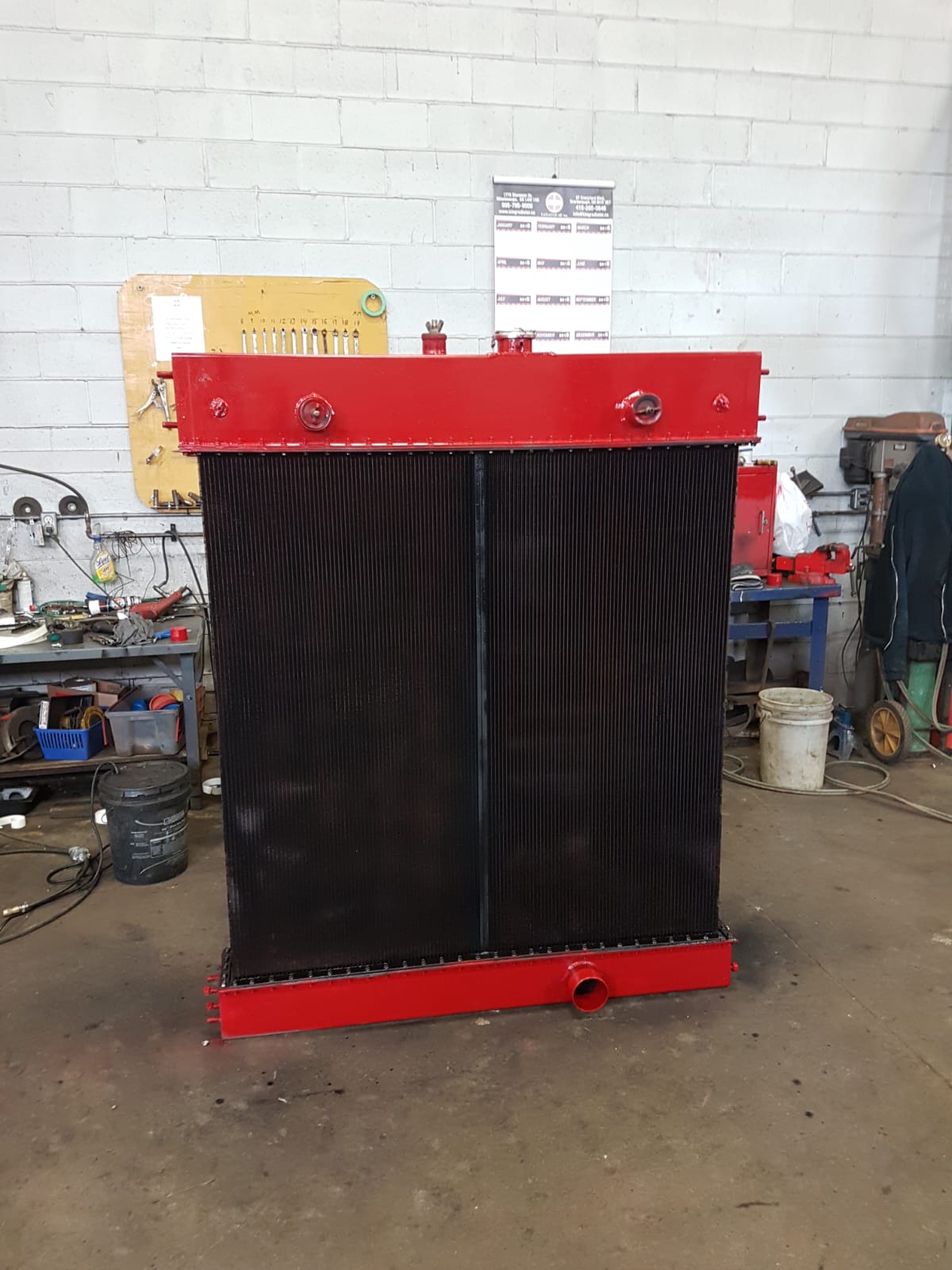
Radiator re-coring is the process of removing the damaged internal core of an existing radiator and replacing it with a new one while keeping the original tanks, frame, and mounting hardware. The result is a fully functional radiator that performs at the level of a new unit, without the cost of replacing the entire assembly.

The internal core is the part of the radiator that actually transfers heat. It consists of hundreds of small tubes surrounded by thin metal fins. Over time, these tubes corrode, crack, or become blocked by mineral deposits and coolant contamination. When the core fails, the outer components of the tanks, frame, and fittings  are often still structurally sound. Re-coring takes advantage of that.

What Happens During a Re-Core

  • Worn or damaged core tubes are removed and replaced with new high-efficiency tubing for improved coolant circulation
  • Header plates are cleaned, inspected, and resealed before the new core is installed
  • Fin material can be upgraded during re-coring for improved airflow and heat dissipation
  • The completed unit is pressure-tested to OEM specifications before leaving our facility
  • The full system is inspected for leaks, flow restrictions, and structural integrity at every stage

Re-coring is a practical choice for industrial equipment, generators, and heavy-duty trucks — especially when replacement units are expensive, hard to source quickly, or when the original housing is a custom or legacy configuration.

Re-Coring vs. Full Replacement Which Is Right for Your Equipment?

The right choice depends on one thing: the condition of the tanks and frame. If those components are structurally sound, re-coring is almost always the smarter, faster, and more economical path. Here is a clear comparison:

Factor Radiator Re-Coring Full Replacement Best Option When...
Cost Typically 40–60% less than full replacement because the original housing is reused Higher upfront cost for a full new assembly Budget matters and the frame/tanks are intact
Turnaround 1 to 2 business days for most jobs Fast if the unit is in stock; may require ordering Speed is critical and a stocked replacement is available
When to use Core is damaged, leaking, or blocked but tanks and frame are structurally sound Frame is cracked, tanks are beyond repair, or repeated failure history exists Assess the frame condition first; this drives the decision
Parts availability Ideal when OEM replacement units are hard to source or expensive Straightforward when a stocked replacement unit exists Re-coring is often the only option for older or legacy equipment
Long-term value A professionally re-cored radiator performs like new with proper materials and testing New unit with full warranty, but higher capital cost Both deliver strong results when matched to the right situation

We inspect every unit before making a recommendation. If the frame is cracked, the tanks are beyond repair, or the unit has a repeated failure history that points to a design mismatch, we will tell you. We do not push re-coring when replacement is the right answer and we do not push replacement when re-coring will do the job properly.

Radiator Performance Upgrades When the Original System Is No Longer Enough

Some cooling problems are not caused by a failed component, they are caused by a cooling system that was never designed to handle the demands being placed on it today. Engine output increases, load changes, longer operating cycles, and extreme Canadian climate conditions can all push a standard radiator past its thermal limits.

When a radiator is consistently running near or above its capacity, re-coring to the original specification will not solve the problem. What is needed is a performance upgrade a targeted improvement to the system’s thermal capacity, airflow efficiency, or core design.

Common signs that an upgrade is warranted include recurring overheating despite a clean and intact cooling system, rising engine temperatures during long run cycles, or equipment that has been modified beyond its original thermal design specs.

Upgrade Type What It Does Equipment Fit Key Benefit
High-density aluminum core Increases heat transfer rate, removing more heat per pass Heavy trucks, generators, mining equipment Lower operating temps under sustained load
Upgraded fin material Improves airflow and heat dissipation across the core surface Equipment in dusty or high-temp environments Reduces hot spots and improves overall thermal efficiency
Increased core dimensions Expands cooling surface area when the original core was undersized Uprated or modified engines, increased load applications Handles higher thermal output without redesigning the system
Multi-pass core design Coolant travels through the core multiple times, removing more heat per cycle Extreme-duty, long operating cycles Prevents thermal saturation during extended heavy operation
Improved header design Optimizes coolant distribution across the core and eliminates dead zones Industrial and process cooling systems More even cooling, fewer failure points at header joints

Upgrades are assessed individually. We review the equipment’s current cooling system, operating conditions, and thermal requirements before recommending any modification. An upgrade that is not matched to the specific application will not deliver meaningful results and we will not recommend one that does not.

Our Industrial Radiator Repair Process Step by Step

Whether the job is a standard re-core or a full performance upgrade, we follow the same structured process on every unit. Nothing leaves our facility without being tested and documented.

: Inspection and Diagnostic Assessment (2 to 4 hours)

When a unit arrives, we conduct a full physical inspection before touching anything. We check the core for damage, blockage, and corrosion. We check the tanks and frame for structural integrity. We assess whether re-coring, an upgrade, or a full replacement is the appropriate path  and we communicate that clearly before any work begins.

01
Core Removal and Ultrasonic Cleaning (2 to 4 hours)

The damaged core is carefully removed. The original tanks and frame are cleaned using industrial ultrasonic systems to remove scale, mineral deposits, oil residue, and corrosion. This step is critical installing a new core into a contaminated housing creates the conditions for accelerated failure.

02
New Core Installation or Upgrade Fabrication (4 to 8 hours)

A new core is installed using high-quality tubing and fin material matched to the equipment's heat load and operating environment. For performance upgrades, we fabricate the new core to the upgraded specification high-density tubes, expanded dimensions, multi-pass design, or upgraded fin material based on the assessment from Step 1.

03
Resealing, Header Inspection, and Assembly

Header plates are inspected, cleaned, and resealed before final assembly. All joints and fittings are verified before the unit is closed. This step is where most re-core failures happen when the work is done incorrectly; header sealing is not a shortcut point.

04
Pressure Testing to OEM Specification (1 to 2 hours)

Every completed unit  re-core or upgrade is pressure-tested to OEM specification before release. We test under conditions that simulate real operating loads to confirm the system holds pressure, flows correctly, and is free of leaks. No unit leaves without passing this test.

05
Documentation and Release

We provide a complete service record for every job what was found, what was done, and what was tested. Fleet operators and equipment managers receive full documentation for their maintenance files.

06

Frequently Asked Questions Radiator Re-Coring and Performance Upgrades

Radiator re-coring is the process of replacing the internal cooling core of an existing radiator while keeping the original tanks and frame. The core made up of small tubes and surrounding fins is where heat transfer actually happens. When the core fails from corrosion, blockage, or physical damage, but the outer housing is still structurally sound, re-coring restores full cooling performance without the cost of replacing the entire unit.

Re-coring replaces only the internal core while reusing the original tanks and frame. Full replacement installs a completely new radiator assembly. Re-coring is the right choice when the housing is intact and the core is the point of failure. Full replacement is the right choice when the frame is cracked, the tanks are damaged, or the unit has failed repeatedly in a way that suggests a design issue. Re-coring typically costs 40 to 60 percent less than full replacement.

In most cases, yes — significantly. Because the original tanks and frame are reused, the material and labour costs are substantially lower than a full replacement. For industrial equipment and heavy-duty trucks where replacement radiators are expensive or hard to source, the savings can be considerable. The exact cost depends on radiator size, the condition of the housing, and whether any upgrades are included. We provide a written quote after a full inspection.

A professionally re-cored radiator using high-quality materials and proper pressure testing will perform like a new unit and can last for many years under normal operating conditions. Actual service life depends on operating temperatures, coolant quality, maintenance intervals, and the demands placed on the cooling system. Regular coolant changes and annual inspections help maximize the lifespan of a re-cored unit.

Most standard re-coring jobs are completed within one to two business days. Custom industrial units or jobs that require upgraded core fabrication may take slightly longer, depending on the specification and material availability. Emergency service is available for equipment that is actively down — contact us with your timeline and we will prioritize accordingly.

We offer high-density aluminum core replacements, upgraded fin material for improved airflow and heat dissipation, increased core dimensions for higher thermal capacity, multi-pass core designs for extreme-duty applications, and optimized header designs for more even coolant distribution. Each upgrade is matched to the specific equipment, operating environment, and thermal requirements identified during our assessment.

A re-core restores original performance. An upgrade is needed when the original performance is no longer sufficient. If your equipment is consistently running hot despite a clean and intact cooling system, if the engine has been modified or its output increased, or if the operating conditions have changed significantly from what the original system was designed for, a performance upgrade is likely the right answer. We assess this during inspection and give you a clear recommendation.

Yes. This is one of the most common reasons fleets and operators come to us. When OEM replacement cores are discontinued, have long lead times, or are priced so high that they make no economic sense, a custom re-core is often the only practical option. We fabricate custom cores to match the original specification or to an improved specification if an upgrade is appropriate.

Before You Replace Your Radiator, Get an Assessment First

A re-core might save you hundreds of dollars and get your equipment back in service faster than a full replacement. It might not be the right answer but you will not know without a proper inspection.

King Radiator HD Inc. provides Canada-wide re-coring and performance upgrade services with warranty coverage on all work. We assess every unit honestly, recommend what actually makes sense for your equipment, and back every job with OEM-specification pressure testing and full documentation.