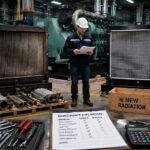

A backup generator rarely fails at a convenient moment. When a storm hits, production demands increase, or an unexpected outage affects operations, every component matters. In many cases, a damaged or aging radiator becomes the hidden cause of downtime, making Generator Radiator Rebuilding an essential solution for restoring reliable performance and keeping critical equipment running.
For many facility managers, the real debate isn’t whether the radiator failed. It’s what comes next: rebuild it or replace it entirely?
On paper, replacement sounds safer. New parts, new warranty, fewer unknowns. But in real field conditions, downtime costs real money. Lead times can also be long. In these cases, rebuilding often becomes a quieter and more strategic option.
This is where the real question arises: generator radiator rebuild vs replace which one actually saves more money over time?
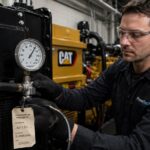
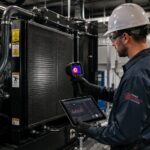
A generator radiator doesn’t fail overnight. It usually deteriorates gradually, often without noticeable warning signs until the cooling system struggles to maintain performance under heavy loads. A properly maintained heavy duty radiator helps ensure reliable heat management and prevents unexpected generator downtime during demanding operating conditions. Regular Radiator Pressure Testing helps identify hidden leaks, pressure issues, and early signs of radiator failure before they lead to unexpected generator downtime.
Common causes include:
In high-demand facilities, heat stress builds up over time. This is especially true for systems that run backup power regularly. Once efficiency drops, the generator compensates by working harder, accelerating wear even further.
At a basic level, the choice looks simple:
But in practice, the decision is more complex than parts alone.
Rebuilding focuses on restoring performance. Replacement focuses on resetting lifespan risk.
And that difference is where cost either compounds or resets.
Instead of treating this as a binary choice, experienced maintenance teams use a three-part evaluation:
If the frame and tanks are structurally sound, rebuilding becomes viable. If corrosion has spread beyond repair points, replacement wins.
If a facility cannot handle long shutdowns, replacement may be the better option. It reduces operational uncertainty, even though it costs more.
A rebuilt radiator may cost less now but require earlier follow-up maintenance. Replacement may cost more upfront, but reduce intervention frequency.
This framework turns a reactive decision into a financial strategy.
Here’s a simplified breakdown used by many facility maintenance teams when evaluating generator radiator rebuild vs replace decisions:
| Factor | Rebuilding | Replacement |
| Upfront Cost | Lower | Higher |
| Downtime Duration | Moderate | Often shorter if the unit is stocked |
| Long-Term Reliability | Depends on workmanship | High consistency |
| Risk of Repeat Failure | Medium | Low |
| Environmental Impact | Lower waste | Higher material use |
| Best Use Case | Repairable core, budget constraints | Severe damage or critical uptime needs |
This table reveals an important truth: the cheapest option upfront is not always the cheapest over time.
There’s a common assumption that rebuilding is always a compromise. In reality, when done properly, it can restore up to near-original performance.
The difference lies in execution quality.
A poorly rebuilt radiator fails early. A properly rebuilt unit can work reliably for years. This is especially true in controlled environments like standby generator systems.
The real risk is not rebuilding itself. It’s rebuilding without proper inspection standards.
Replacement makes sense in specific situations:
In these cases, replacement reduces uncertainty. And in industrial operations, uncertainty is often the most expensive variable.
One industrial facility operated multiple backup generators and experienced recurring overheating issues during seasonal load increases. After identifying the cooling system challenges, the facility initially chose partial Industrial Radiator rebuilds as a cost-saving approach to restore performance while minimizing downtime.
For a short period, performance stabilized. But within 18 months, the failures became more frequent again. This time, the facility had to fully replace two units.
The lesson wasn’t that rebuilding failed. It was that the initial assessment underestimated the system’s overall thermal stress and lifecycle stage.
Before choosing rebuild or replace, facility managers can use this quick decision path:
If two or more answers lean toward uncertainty, replacement often becomes the safer financial decision.
Across industrial operations, generators are running harder and more frequently due to:
This means radiator systems are not just passive parts anymore. They have become active points of stress in keeping operations running smoothly.
As mechanical engineer Henry Ford once famously noted:
“Quality means doing it right when no one is looking.”
That principle applies directly to radiator decisions. A rushed rebuild might solve today’s issue, but create tomorrow’s shutdown.
The biggest cost mistake facilities make is focusing only on repair invoices.
True savings come from:
In other words, the radiator decision is never just about the radiator.
It’s about everything that depends on it.
The debate between rebuilding and replacing a generator radiator is not just about parts. It is about risk tolerance, how urgent operations are, and long-term cost control.
The smartest facilities don’t choose the cheapest option. They choose the one that protects uptime the longest.
That shift in thinking is often where real savings begin.
If you want reliable generator radiator rebuilding, repair, or replacement that protects uptime and reduces downtime risk, choose King Radiator HD Inc.
Rebuilding restores existing components, while replacement installs a completely new unit.
When structural damage, severe corrosion, or repeated failures occur.
Usually, yes, upfront, but long-term cost depends on durability and downtime risk.
Not if done correctly with proper testing and core restoration.
Corrosion, clogging, vibration stress, and coolant neglect.
A professional inspection of core integrity and leak patterns determines viability.
Rebuilding is often less expensive upfront because existing structural components are reused. Replacement may involve higher equipment, shipping, and installation costs, especially for industrial systems.